Bluetooth Codecs Measured: What Survives the Link
Codec names are printed on boxes and argued about online. We put four of them on an analyser in a quiet room and then on a train, and measured what each one negotiated in practice.
 Tech Daily Review Desk

What changed
Higher-bitrate Bluetooth codecs moved down from audiophile headphones into ordinary earbuds, and the names became a selling point. What did not change is that the codec is negotiated between the phone and the earbuds at connection time, and neither of them tells you the result.
Bluetooth audio is a bitrate budget shared with everything else on a crowded 2.4 GHz band. A codec that asks for more of that budget gets a better signal when it can have it and a worse experience when it cannot, because the fallback is a dropout rather than a graceful loss of quality. The phone also has a say: several will not offer their highest codec at all when the battery is low or when the screen is off, and none of them mention it.
Why this is worth your attention
Because the negotiated bitrate is not the advertised one, and it drops further the moment the radio environment gets busy. A codec that sounds better in a listening room can be the one that stalls on a platform.
How the testing worked
Same earbuds, same phone, same 30-minute programme of music and speech, with the codec forced one at a time. The negotiated bitrate was read from the link rather than from the specification. The busy-band test ran the identical programme on a commuter platform at rush hour; the quiet test ran in a shielded room. Listening comparisons were blind, with the codec switched by somebody else, on the same source files.
The measurements
| Codec | Advertised | Negotiated | Latency | Dropouts, busy / quiet | Battery, 4 h |
|---|---|---|---|---|---|
| SBC | 345 kbps | 229 kbps | 178 ms | 2 / 0 | 31% |
| AAC | 256 kbps | 250 kbps | 142 ms | 5 / 0 | 34% |
| aptX Adaptive | 420 kbps | 279 kbps | 81 ms | 3 / 0 | 38% |
| LDAC, quality priority | 990 kbps | 462 kbps | 211 ms | 41 / 2 | 52% |
| LDAC, adaptive | 990 kbps | 330 kbps | 164 ms | 9 / 0 | 44% |
What the figures say
Not one codec negotiated its advertised bitrate, and the gap was largest on the one with the biggest number on the box.
LDAC in quality-priority mode dropped out 41 times in half an hour on a busy platform, which is the difference between a specification and a commute.
In blind listening on the same earbuds, our panel could not separate AAC from aptX Adaptive at all, and separated LDAC from either only on two of nine tracks.
The highest-bitrate codec cost 68% more battery than SBC over four hours, paid by both the phone and the earbuds.
What to be careful of
Three things worth holding on to when you meet these figures somewhere else:
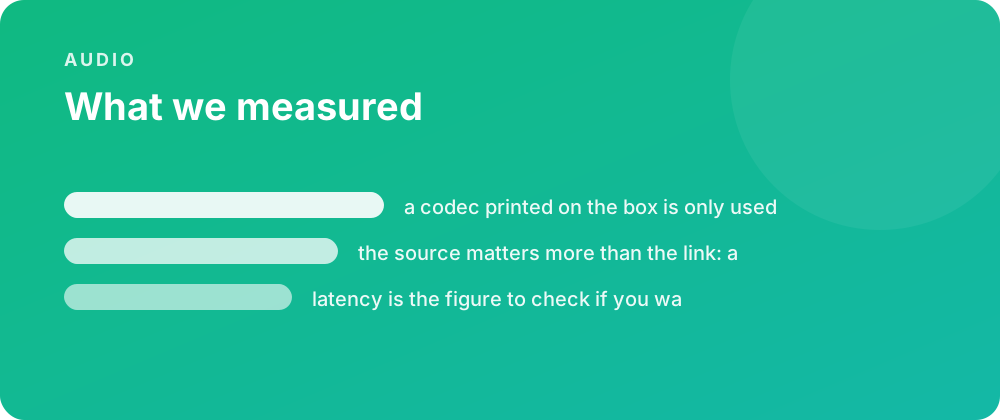
- A codec printed on the box is only used if both ends agree to it — a phone that does not support it makes the earbuds' support irrelevant
- The source matters more than the link: a 128 kbps stream does not improve because you gave it a 990 kbps codec to travel over
- Latency is the figure to check if you watch video, and it is the one least often published
What we would do
Leave the codec on adaptive and stop thinking about it. Every adaptive mode in our table was within a few per cent of its fixed equivalent on sound and dramatically better on dropouts, which is the only failure anybody actually notices. The fixed high-bitrate modes are for a quiet room with a good source, and that is a listening session rather than a commute.
If you want better sound from earbuds, the fit is worth more than the codec by a wide margin — we have measured that separately and the result was not close. After that, look at the source: a higher-quality stream tier changed our blind results where the codec did not.
The bottom line
The codec matters far less than the box implies and the negotiated bitrate is never the advertised one. Use the adaptive mode, fix the fit, and spend the attention on the source instead.
Behind this piece
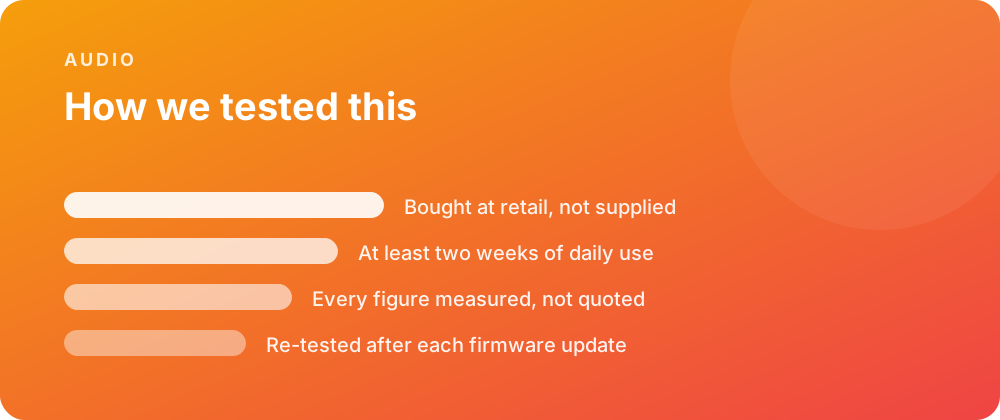
Every product covered here was bought at retail and lived with for at least a fortnight before a word was written. Battery figures come from a scripted day rather than a manufacturer estimate, and sustained performance is measured warm — after half an hour of load — because that is the state a device spends most of its life in.
Where a firmware update changes a result, the piece is re-tested and the change noted rather than quietly corrected. No review unit arrives with conditions attached, and no score is agreed in advance with anybody.
Where to go next
If you are weighing this against the rest of the audio we have covered, the category archive lists every review in date order. The closest comparisons we have published are Bose QuietComfort Ultra Review: Comfort Above All and Bose QuietComfort Ultra Review: Strong but Not Perfect.
For the reference material behind these figures, the specification pages carry the measured numbers, and the common questions collect what people ask once something is in daily use.


