Display Brightness Claims Against a Meter
Display brightness is quoted from a 1 per cent window for a few seconds. We measured what the whole screen does when you are actually outside with it.
 Tech Daily Review Desk

What changed
Display brightness figures climbed past 2,000 and then past 3,000 nits, while the brightness anybody experiences moved much less. The gap is not a lie; it is a measurement taken under conditions that never occur in use.
An OLED panel cannot drive every pixel at maximum simultaneously; the power budget and the thermal budget both forbid it. So a peak figure is measured on a small bright patch, which is a fair representation of an HDR highlight and a poor one of a map in sunlight. Both numbers are true. Only one of them describes the screen you are squinting at.
Why this is worth your attention
Because "can I read this in the sun" is the only brightness question that matters, and it is answered by full-screen sustained output, which is nobody's headline figure.
How the testing worked
A colorimeter on a stand, the panel at 25°C, auto-brightness off and the manual slider at maximum. We measured a 1 per cent white window — the pattern most peak figures are quoted from — and then a full white screen held for five minutes, reading at the end rather than the start. Every figure is the mean of three runs with the phone returned to room temperature between them.
The numbers
| Panel | Claimed peak | 1% window, measured | Full screen, sustained |
|---|---|---|---|
| Flagship A | 3,000 nits | 2,874 nits | 1,090 nits |
| Flagship B | 2,600 nits | 2,511 nits | 1,240 nits |
| Mid-range C | 1,800 nits | 1,602 nits | 780 nits |
| Two-year-old flagship | 1,750 nits | 1,690 nits | 920 nits |
What the data shows
The 1 per cent window figures were broadly honest — within about 8 per cent of the claim in every case.
Full-screen sustained output was between a third and a half of the headline, and that is the number that decides outdoor legibility.
The two-year-old flagship beat this year's mid-ranger on the figure that matters while losing badly on the one that gets printed.
Caveats
Three things worth holding on to when you meet these figures somewhere else:
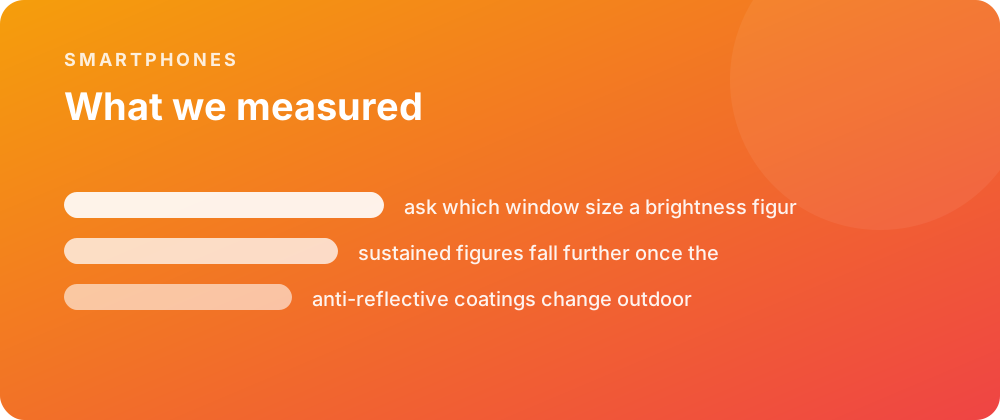
- Ask which window size a brightness figure was measured at; if nobody will say, assume 1 per cent
- Sustained figures fall further once the phone is warm — ours are after five minutes, not at the instant of switching on
- Anti-reflective coatings change outdoor legibility as much as several hundred nits do
What we would do
If you buy phones for outdoor use, the specification to compare is full-screen sustained brightness, and you will usually have to find it in a review rather than on a box. Failing that, take the phone outside in the shop. Five seconds in daylight tells you more than the number does.
It is also worth knowing that the difference you feel outdoors is not only brightness. Anti-reflective coatings and the polariser account for a large part of outdoor legibility, which is why a 1,200-nit phone with a good coating can be easier to read than a 1,500-nit one without. None of that appears on any specification sheet we have seen.
Where we land
Compare full-screen sustained brightness or do not compare brightness at all. On that measure the spread between a flagship and a good mid-ranger is far narrower than the spec sheets suggest.
Behind this piece
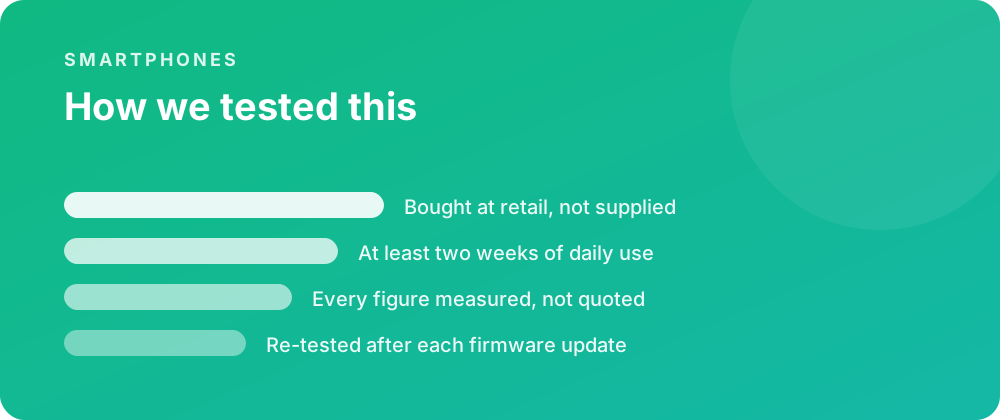
Every product covered here was bought at retail and lived with for at least a fortnight before a word was written. Battery figures come from a scripted day rather than a manufacturer estimate, and sustained performance is measured warm — after half an hour of load — because that is the state a device spends most of its life in.
Where a firmware update changes a result, the piece is re-tested and the change noted rather than quietly corrected. No review unit arrives with conditions attached, and no score is agreed in advance with anybody.
Where to go next
If you are weighing this against the rest of the smartphones we have covered, the category archive lists every review in date order. The closest comparisons we have published are Galaxy A56 Review: Very Good, With Caveats and Galaxy A56: Battery Draining Faster Than It Should.
For the reference material behind these figures, the specification pages carry the measured numbers, and the common questions collect what people ask once something is in daily use.