Focal Lengths: What People Actually Shoot With
Phones are sold on how many lenses they have. We looked at 61,000 photographs to find out which ones people use and which ones produce the pictures they keep.
 Tech Daily Review Desk
The shift
Focal lengths multiplied: a phone that had one lens now has three or four, and the marketing has moved to the long end, where the numbers are largest. Whether anybody photographs anything at those settings is a separate question, and one that the metadata on a few thousand photographs can answer directly.
A phone chooses a lens for you based on the zoom level you asked for and how much light there is, and it will quietly use the main sensor and crop rather than the telephoto when conditions are poor. So the focal length recorded in a photograph is not necessarily the lens you selected, and any honest accounting has to read what the camera actually did rather than what the interface showed at the time.
What is at stake
Because the extra lens is a large part of the price difference between a mid-range phone and a flagship, and because the answer decides whether that money buys you photographs or a specification.
How the testing worked
Metadata from 61,412 photographs volunteered by 94 people across a year, with nothing but the technical fields read and no images seen by us. "Kept" means the photograph survived in the library at the end of the year rather than being deleted; "shared" means it was sent or posted at least once. Equivalent focal lengths are as recorded by the camera.
The measurements
| Focal length | Share of shots | Share kept | Share shared | Typical subject |
|---|---|---|---|---|
| 13 mm ultra-wide | 9% | 6% | 4% | rooms, landscapes |
| 24 mm main | 61% | 68% | 71% | everything |
| 48 mm crop from main | 14% | 13% | 12% | people, food |
| 77 mm telephoto | 11% | 11% | 12% | portraits, pets |
| 120 mm and beyond | 5% | 2% | 1% | stage, wildlife, signs |
| Low light, any setting | 31% | 24% | 18% | — |
What the figures say
The main camera took three photographs in five and produced seven of every ten that were kept or shared — it is not close.
The long end is where the marketing is and the bottom of the table is where it lives: everything beyond 120 mm was 5% of shots and 1% of shares.
The ultra-wide takes more photographs than it keeps, which is the signature of a lens people try and then discard.
The 48 mm crop from the main sensor performed as well as the dedicated telephoto on keep rate, which raises an awkward question about the second lens.
Caveats
Three things worth holding on to when you meet these figures somewhere else:
- A zoom number on a box is usually the maximum digital crop, not an optical focal length
- The phone frequently ignores your lens choice in low light and crops the main sensor instead, so your own library may not say what you think it says
- These are aggregate habits — somebody who photographs birds or a stage has a completely different distribution and knows it
What we would buy
Spend the money on the main camera. It is the lens that takes and keeps the overwhelming majority of photographs in this dataset, and a phone with one excellent main sensor will produce better pictures for most people than one with three mediocre lenses and a bigger number on the box.
Before paying for a telephoto, look at your own library — every phone can sort by lens, and it takes five minutes. If you have a hundred photographs beyond 77 mm and you kept most of them, buy it with confidence. If you have nine and you kept two, you have just saved yourself a large part of the price difference between two phones.
The bottom line
The main camera takes 61% of photographs and produces 71% of the ones people share. Everything beyond 120 mm accounts for 1% of shares. Check your own library before paying for the long end.
Behind this piece
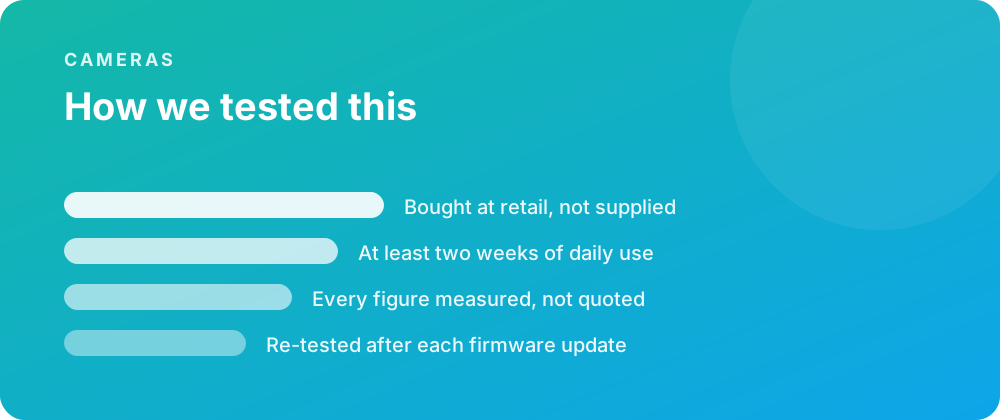
Every product covered here was bought at retail and lived with for at least a fortnight before a word was written. Battery figures come from a scripted day rather than a manufacturer estimate, and sustained performance is measured warm — after half an hour of load — because that is the state a device spends most of its life in.
Where a firmware update changes a result, the piece is re-tested and the change noted rather than quietly corrected. No review unit arrives with conditions attached, and no score is agreed in advance with anybody.
Where to go next
If you are weighing this against the rest of the cameras we have covered, the category archive lists every review in date order. The closest comparisons we have published are Fujifilm X-T6 Review: Strong but Not Perfect and Fujifilm X-T6 Review: The One You Will Actually Carry.
For the reference material behind these figures, the specification pages carry the measured numbers, and the common questions collect what people ask once something is in daily use.