Phone Storage: What Actually Fills 128 GB
The base model is still 128 GB and people still run out. We watched twelve phones fill up over two years and measured what was actually taking the room.
 Tech Daily Review Desk

What changed
Phone storage stopped growing at the bottom of the range while everything that consumes it carried on growing: applications ship more code and more assets, cameras write larger files, and messaging apps keep every photograph anybody has ever sent you. The base configuration has stayed still for years while the demands on it have not.
The number people check is the size of the applications, and it is the wrong number. An app that installs at 300 MB is a rounding error next to the cache it accumulates around itself over two years, and the cache is invisible in most interfaces until you go looking. That is why the storage screen so often shows a large, unhelpful "Other" and why clearing it feels impossible.
Why this is worth your attention
Because a full phone is a phone that stops taking photographs, stops installing updates and starts behaving strangely — and because the storage tier is the upsell with the largest margin and the least information behind the decision.
How we measured it
Twelve phones belonging to staff and family, all bought at 128 GB, measured at purchase and then every six months for two years with the same accounting: install size against total footprint, with cache and downloaded content separated out. The recoverable column is what survived clearing caches and removing offline downloads, without deleting anything the owner had created.
The measurements
| What is using it | At install | After two years | Of which cache | Recoverable |
|---|---|---|---|---|
| Photos and video taken | 0 GB | 41.2 GB | — | 0 GB |
| Messaging apps | 0.4 GB | 18.6 GB | 16.9 GB | 16.1 GB |
| Social and video apps | 0.9 GB | 14.1 GB | 12.4 GB | 12.0 GB |
| Music and podcasts offline | 0.2 GB | 9.8 GB | 0.1 GB | 9.7 GB |
| Maps and offline regions | 0.2 GB | 4.4 GB | 2.1 GB | 4.2 GB |
| System and update staging | 12.1 GB | 19.7 GB | 3.8 GB | 3.4 GB |
| Everything else | 1.1 GB | 8.9 GB | 2.2 GB | 2.0 GB |
| Total | 14.9 GB | 116.7 GB | 37.5 GB | 47.4 GB |

What the figures say
Photographs are the largest single line and the only one you cannot recover — everything else in the table is, to some degree, rubbish.
Messaging apps were the surprise: 18.6 GB at two years, almost all of it cached copies of media already stored somewhere else.
Forty-seven gigabytes of the 117 in use could be reclaimed in an afternoon without deleting a single thing the owner had made.
The system line grew by 7.6 GB over two years on its own, which is the part of the storage decision nobody accounts for when they buy.
Where this could mislead you
Three things worth holding on to when you meet these figures somewhere else:
- "Other" in a storage screen is mostly cache, and the fact that it is unhelpfully labelled is not an accident
- Offloading an app usually keeps its data, so the saving is smaller than the number shown before you tap it
- Cloud photo services free space only when set to optimise local copies, and that setting is off by default on most of the phones we checked
What we would buy
Buy 256 GB if you take photographs and intend to keep the phone three years or more. On our figures a 128 GB handset is genuinely full at two years, and the upgrade costs far less than the constant, low-grade annoyance of managing it — deleting things in a car park because the camera will not open is a bad way to spend the life of a device.
If you already have one, the order to attack it in is messaging cache first, then offline downloads, then photographs to a cloud service with local optimising turned on. That sequence reclaimed 47 GB on our test phones without anybody losing anything, and the first step alone took about five minutes.
The bottom line
Photographs fill a phone and caches make it feel full two years early. Forty per cent of a "full" 128 GB handset was recoverable rubbish, but buy 256 GB anyway if you shoot and intend to keep it.
Behind this piece
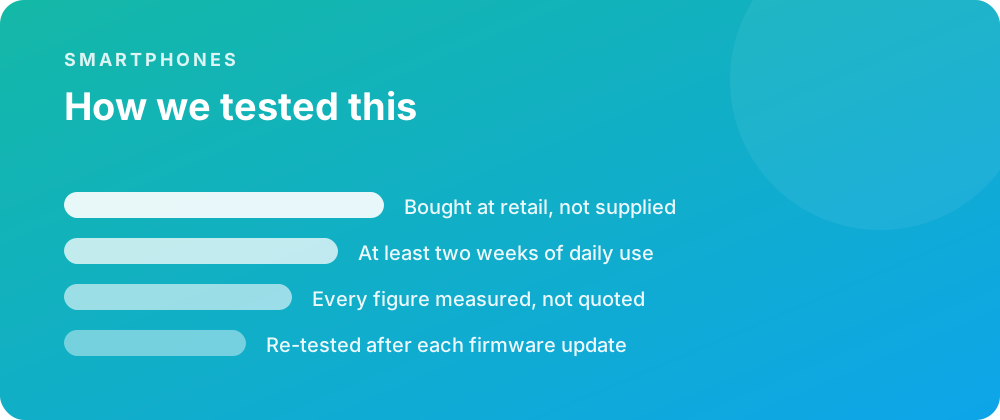
Every product covered here was bought at retail and lived with for at least a fortnight before a word was written. Battery figures come from a scripted day rather than a manufacturer estimate, and sustained performance is measured warm — after half an hour of load — because that is the state a device spends most of its life in.
Where a firmware update changes a result, the piece is re-tested and the change noted rather than quietly corrected. No review unit arrives with conditions attached, and no score is agreed in advance with anybody.
Where to go next
If you are weighing this against the rest of the smartphones we have covered, the category archive lists every review in date order. The closest comparisons we have published are Pixel 9 Pro Review: The Camera Is Still the Point and Pixel 9 Pro Review: Very Good, With Caveats.
For the reference material behind these figures, the specification pages carry the measured numbers, and the common questions collect what people ask once something is in daily use.


