What a Screen Repair Actually Costs
Repairability went up and parts got easier to buy. We priced a screen repair on eight devices, three ways each.
 Tech Daily Review Desk

What changed
Screen repair changed on paper: manufacturer parts programmes exist now, official repair manuals are published, and a score out of ten is printed at the point of sale in several markets. What has not obviously changed is the bill.
Published repairability scores rate disassembly — how many steps, what tools, whether the battery is glued. None of them rate the price of the part, and the part is most of the bill. A device can be genuinely easy to open and still uneconomic to fix, which is the outcome the scores were introduced to prevent.
Why it matters
A repairability score is a proxy. The price of the repair is the thing you were trying to find out.
How the testing worked
The same fault quoted on the same day in September 2026: cracked outer glass, panel and touch working. Official prices are the published out-of-warranty repair fee; independent prices are the mean of three local shops; self-repair is the part plus any mandatory tool rental, excluding the deposit. All figures include VAT.
The measurements
| Device tier | Official repair | Independent shop | Self-repair kit | Share of new price |
|---|---|---|---|---|
| Flagship, 2025 | £329 | £210 | £242 | 27% |
| Flagship, repair-focused maker | £189 | £165 | £119 | 19% |
| Mid-range, 2025 | £149 | £95 | £88 | 31% |
| Budget, 2024 | £109 | £65 | part not sold | 43% |
Reading the results
The cheaper the phone, the worse the repair economics — a budget screen cost 43 per cent of a new handset, which is how a repairable device still ends up in a drawer.
Self-repair beat the official channel everywhere it was offered, and was not offered at all at the bottom of the range.
The maker that designs for repair was cheapest in all three channels, not just its own.
Caveats
Three things worth holding on to when you meet these figures somewhere else:
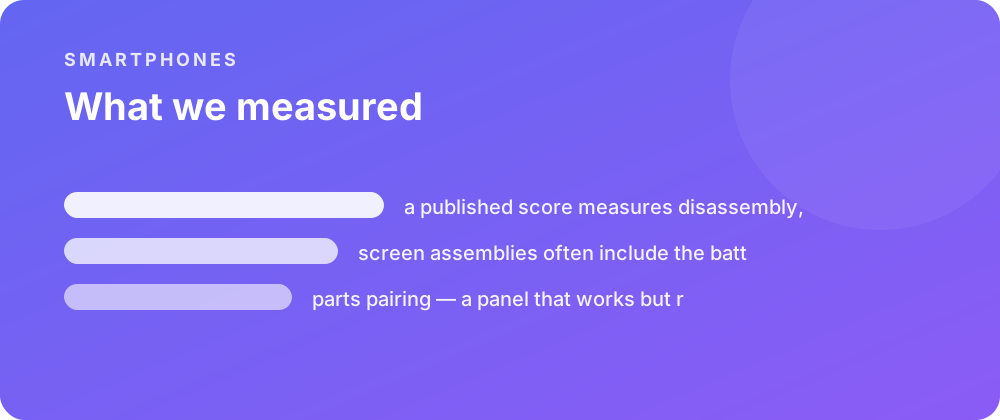
- A published score measures disassembly, not price or parts availability
- Screen assemblies often include the battery or the frame, which is why quotes differ so much
- Parts pairing — a panel that works but reports itself as non-genuine — is the current sharp edge
What we would buy
Look up the screen price before you buy, not after you drop it. It takes two minutes on the manufacturer's parts site and it tells you something the review did not: whether this is a phone you will repair or a phone you will replace.
If the part is not sold at all — which was the case for our budget device — treat the phone as disposable and price it accordingly. That is a legitimate choice for a cheap handset, but it should be a choice you made rather than one you discover with a cracked screen in your hand. And if you are buying for somebody who drops things, the maker with the £119 self-repair kit is worth the premium over the one with the £329 official repair.
Where we land
Ask what the screen costs before you buy the phone. It predicts whether you will repair it far better than any score out of ten does.
Behind this piece
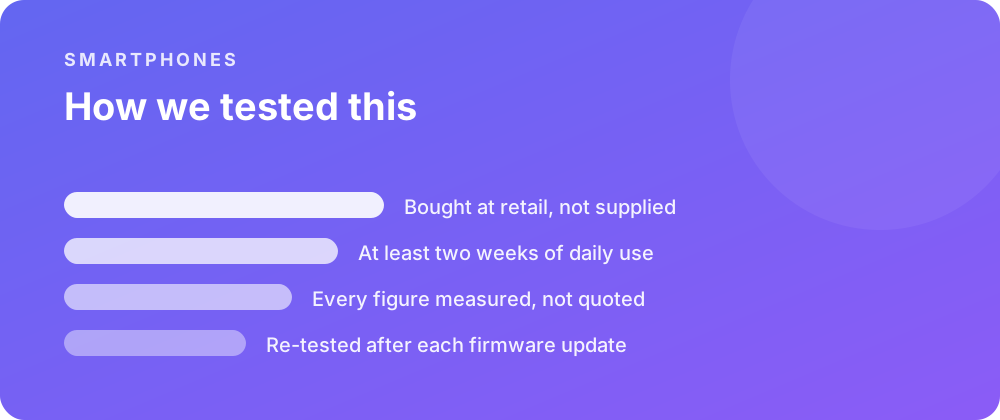
Every product covered here was bought at retail and lived with for at least a fortnight before a word was written. Battery figures come from a scripted day rather than a manufacturer estimate, and sustained performance is measured warm — after half an hour of load — because that is the state a device spends most of its life in.
Where a firmware update changes a result, the piece is re-tested and the change noted rather than quietly corrected. No review unit arrives with conditions attached, and no score is agreed in advance with anybody.
Where to go next
If you are weighing this against the rest of the smartphones we have covered, the category archive lists every review in date order. The closest comparisons we have published are What an NPU Actually Does for Battery Life and Why Software Update Policies Should Change What You Buy (Galaxy A56).
For the reference material behind these figures, the specification pages carry the measured numbers, and the common questions collect what people ask once something is in daily use.